The Enclave
Font del Gat is barely a neighbourhood in the conventional sense. It is a small enclave of residential streets on the Montjuïc hillside, above Poble Sec and below the gardens of the Fundació Joan Miró. It has no metro station, no commercial street, no particular reason for most Barcelonans to visit. This is precisely its appeal, and it is the thing that buyers who find it tend to find most difficult to explain to anyone who hasn't.
The area takes its name from the Font del Gat restaurant — a Modernista pavilion set in the Jardins de Laribal that has been serving food on the hillside since 1897. The gardens themselves are among the best-kept secrets in Barcelona: terraced, formally planted, crossed by water channels and small fountains, and almost entirely unknown even to long-term residents of the city. They are a ten-minute walk above the neighbourhood's residential streets and a world apart from the city below. On a weekday morning in any season except peak summer, they are essentially empty.
Culture on the Hill
The Fundació Joan Miró, designed by Josep Lluís Sert and opened in 1975, is a ten-minute walk up the hill from the residential streets. One of the finest purpose-built art museums in Europe — the building alone justifies the visit — it houses the most comprehensive collection of Miró's work in existence, including a substantial body of work donated by the artist himself. The Jardí Botànic, on the southern slopes of Montjuïc, covers fourteen hectares of Mediterranean flora and is reliably uncrowded. The Fundació and the garden together give Font del Gat a cultural infrastructure that would be the envy of larger and more prominent neighbourhoods.
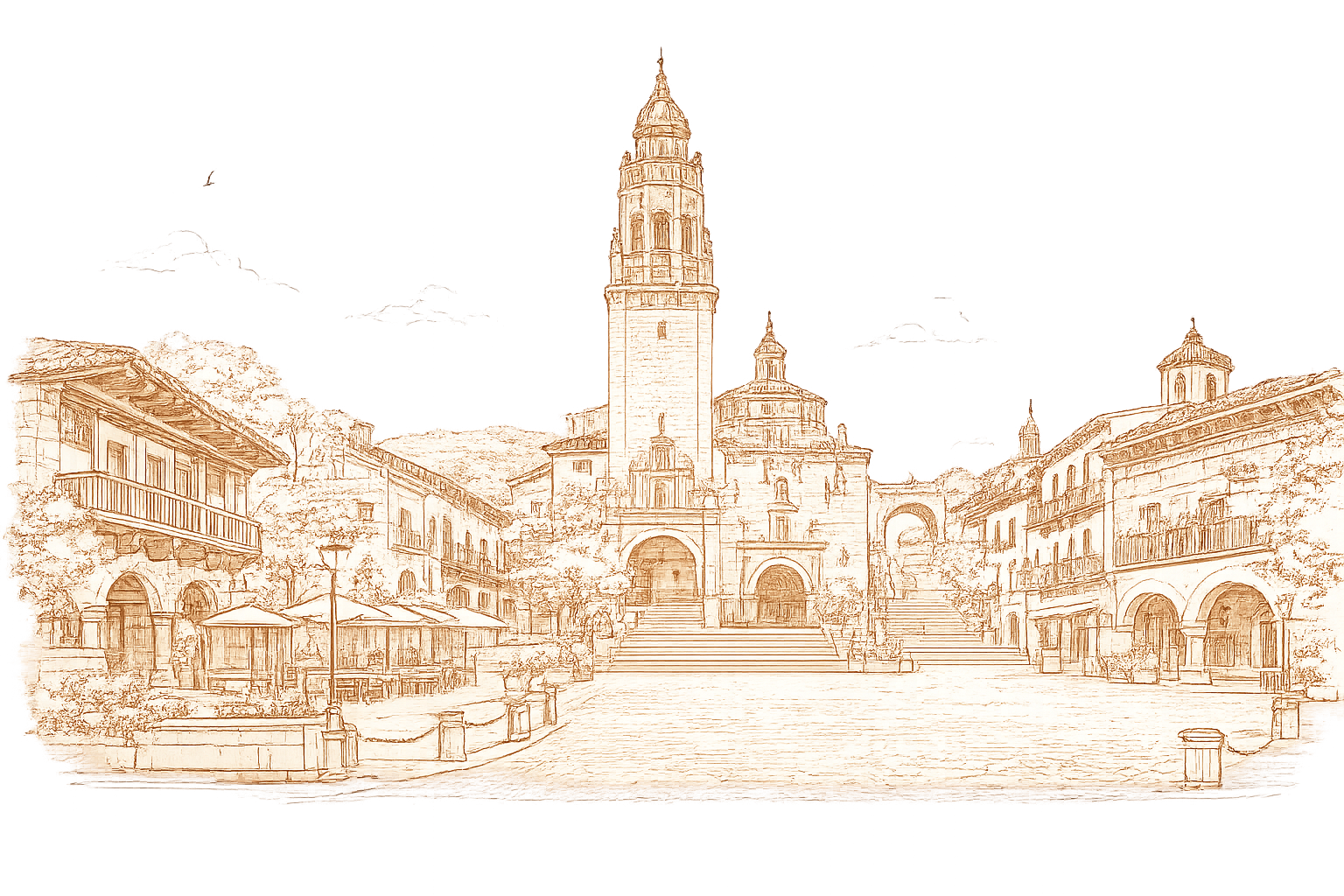
The Poble Espanyol is immediately adjacent and warrants more serious attention than its tourist-attraction status might suggest. Built for the 1929 International Exposition as an open-air architectural museum, it assembles architectural fragments and complete facades from across Spain into a walkable village that is genuinely curious and, at certain times of day and year, genuinely atmospheric. In the morning before the tour groups arrive, or in the off-season on a grey afternoon, it reads as something stranger and more interesting than a theme park.
The Streets
The residential streets of Font del Gat are few and their character is distinct. The houses and apartment buildings here sit on a hillside with views over the city, embedded in a landscape that is partly park and partly urban, and surrounded by the quiet that the hill provides. There is no commercial noise, no tourist foot traffic, and no sense that the city is immediately below — though it is, in fact, minutes away on foot or by the cable car that connects Montjuïc to the city.
The Property Market
Properties here are few and rarely available. When they do come to market, they tend to be houses or large apartments with gardens and views — the kind of property that does not exist in the Eixample or Gràcia. Values are difficult to generalise from a small transaction volume, but the scarcity of supply relative to a stable and consistent demand means that this market has shown remarkable resilience through broader cycles.
The Transport Question
The transport question is the honest limitation. There is no metro station in Font del Gat; the nearest connections are in Poble Sec, a ten-to-fifteen-minute walk down the hill. For buyers whose working lives require frequent and flexible movement around the city, this demands consideration. For buyers who work from home, who travel periodically, or who have arranged their professional lives in ways that make the daily commute a secondary concern, it is perfectly manageable.
The buyers who find Font del Gat tend not to leave. They have found something that does not exist elsewhere in Barcelona — a genuinely private, genuinely quiet residential life within fifteen minutes of the centre of a major European city — and they understand, correctly, that it is not replaceable.